## 一、框架
二、MVC,MVP 和 MVVM 的图示
MVC,MVP 和 MVVM 的图示
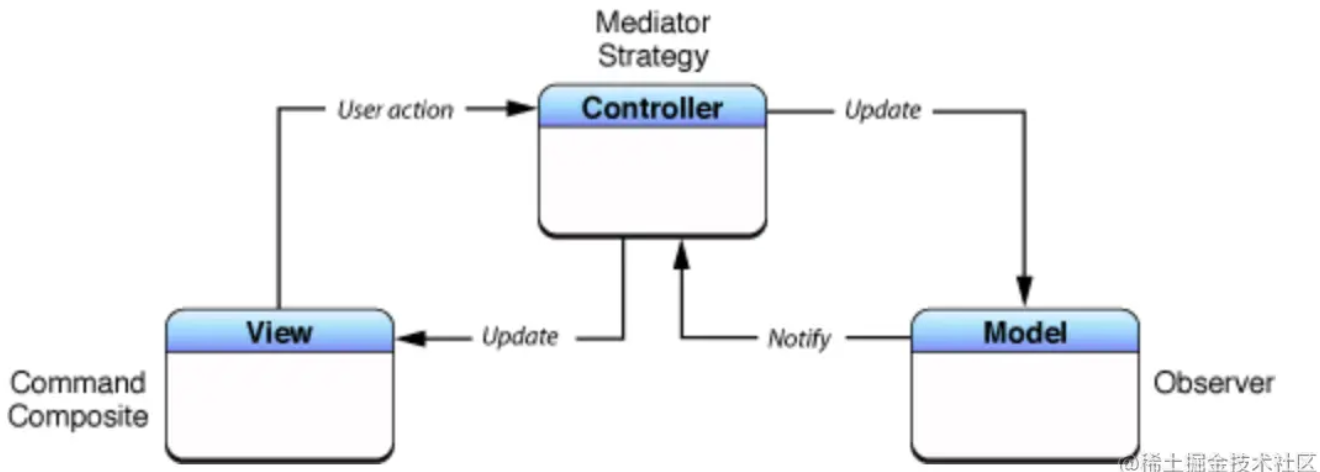
MVC(Model-View-Controller)既可以被视为一种复合设计模式(由多个基本设计模式组合而成),也可以被看作一种架构模式(Architectural Pattern),具体取决于讨论的上下文和应用的规模。
作为复合设计模式
- MVC结合了多种基本设计模式:
- 观察者模式(Observer):View观察Model的变化
- 策略模式(Strategy):Controller是可替换的行为策略
- 组合模式(Composite):用于构建View的层次结构
- 在这个层面上,MVC解决的是UI层的组织问题,关注的是代码层面的职责分离
(三)MVC模式
应用场景:MVC模式是一种非常古老的设计模式,它通过数据模型,控制器逻辑,视图展示将应用程序进行逻辑划分。
实例:model-即数据模型,view-视图展示,controller进行UI展现和数据交互的逻辑控制。
三、MVC与MVVM
1、MVC的开发模式
MVC是模型、视图、控制器开发模式,对于iOS SDK,所有的View都是视图层的,它应该独立于模型层,由视图器来控制。所有的用户数据都是模型层,它应该独立于视图。所有的ViewController都是视图器,由它负责控制视图,访问模型数据。
2、关于MVC 和 MVVM 的区别
MVVM 介绍
1. 传统的 MVC 架构模式
2. MVP 架构模式
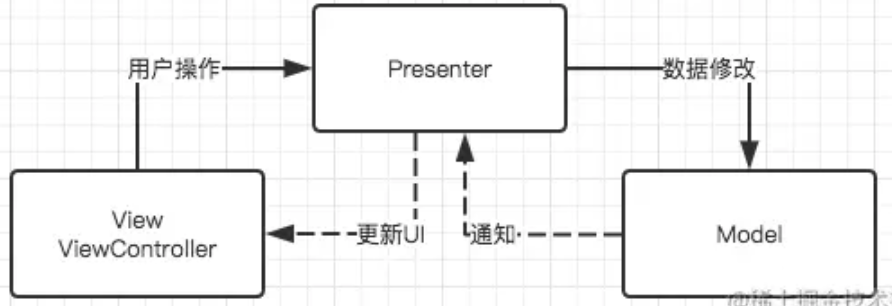
用户在view上的操作,会通过vm对model进行数据的修改;
数据的修改引起的属性变化会通知到vm上;
vm根据变化进行view UI的更新;
3. MVVM 架构模式
MVVM 模式将 Presenter 改名为 ViewModel,基本上与 MVP 模式完全一致。
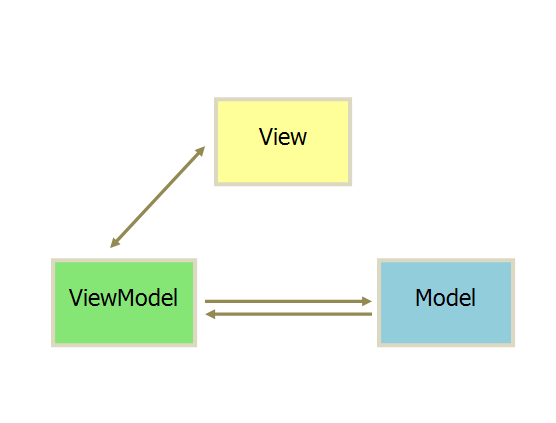
唯一的区别是,它采用双向绑定(data-binding):View的变动,自动反映在 ViewModel,反之亦然。
MVVM的代码实现
ViewModel设计的了解,请进入项目:《DvlproadDesignPatternCollect》中的 CJViewModelDemo。
该项目采用block、delegate、KVO、RAC四种方式介绍ViewModel的设计。 详情请查看:CJViewModelDemo 中 ViewModelDemos 文件夹下的代码。
Flutter 中可查看 001-UIKit-CQDemo-Flutter 项目中的 tsdemodemo_flutter 工程里的 architecture 文件目录
该MVVM设计在其他项目中的使用,可见:CJStandardProject 的 LoginViewModel.m
1
2
3
4
5
6
7
8
9
10
11
12
13
14
15
16
17
18
19
20
21
22
23
24
25
26
27
28
29
30
31
32
33
34
35
36
37
38
|
#import <Foundation/Foundation.h>
@protocol LoginViewModelDelegate <NSObject>
- (void)logic_checkUserNameWithValid:(BOOL)valid;
- (void)logic_checkPasswordWithValid:(BOOL)valid;
- (void)logic_checkLoginWithValid:(BOOL)valid;
@end
@interface LoginViewModel : NSObject {
}
@property (nonatomic, weak) id<LoginViewModelDelegate> delegate;
@property (nonatomic, copy, readonly) NSString *userName;
@property (nonatomic, copy, readonly) NSString *password;
- (instancetype)initWithUserName:(NSString *)userName password:(NSString *)password;
#pragma mark - Update
- (void)updateUserName:(NSString *)userName;
- (void)updatePassword:(NSString *)password;
#pragma mark - Do
- (NSString *)checkLoginCondition;
- (void)loginWitLoginSuccess:(void (^)(NSString *successMessage, DemoUser *user))loginSuccess
loginFailure:(void (^)(NSString *errorMessage))loginFailure;
@end
|
其他MVVM说明示例
设有如下原始Model
1
2
3
4
5
6
7
8
9
10
| @interface Person : NSObject
- (instancetype)initwithSalutation:(NSString *)salutation firstName:(NSString *)firstName lastName:(NSString *)lastName birthdate:(NSDate *)birthdate;
@property (nonatomic, readonly) NSString *salutation;
@property (nonatomic, readonly) NSString *firstName;
@property (nonatomic, readonly) NSString *lastName;
@property (nonatomic, readonly) NSDate *birthdate;
@end
|
则如果仅有此Model的话,我们在PersonViewController中
1
2
3
4
5
6
7
8
9
10
11
12
| - (void)viewDidLoad {
[super viewDidLoad];
NSString *nameText = nil;
if (self.personModel.salutation.length > 0) {
nameText = [NSString stringWithFormat:@"%@ %@ %@", self.personModel.salutation, self.personModel.firstName, self.personModel.lastName];
} else {
nameText = [NSString stringWithFormat:@"%@ %@", self.personModel.firstName, self.personModel.lastName];
}
self.nameLabel.text = nameText;
}
|
而如果我们进而增加一个ViewModel,则如果我们PersonViewController中可以简化成
1
2
3
4
5
6
7
8
9
10
11
12
13
14
15
16
17
18
19
20
21
22
23
24
| @implementation PersonViewModel
- (instancetype)initWithPerson:(Person *)person {
self = [super init];
if (!self) return nil;
_person = person;
if (person.salutation.length > 0) {
_nameText = [NSString stringWithFormat:@"%@ %@ %@", self.person.salutation, self.person.firstName, self.person.lastName];
} else {
_nameText = [NSString stringWithFormat:@"%@ %@", self.person.firstName, self.person.lastName];
}
return self;
}
@end
// 此时我们PersonViewController中可以简化成
- (void)viewDidLoad {
[super viewDidLoad];
self.nameLabel.text = self.personViewModel.nameText;
}
|
END